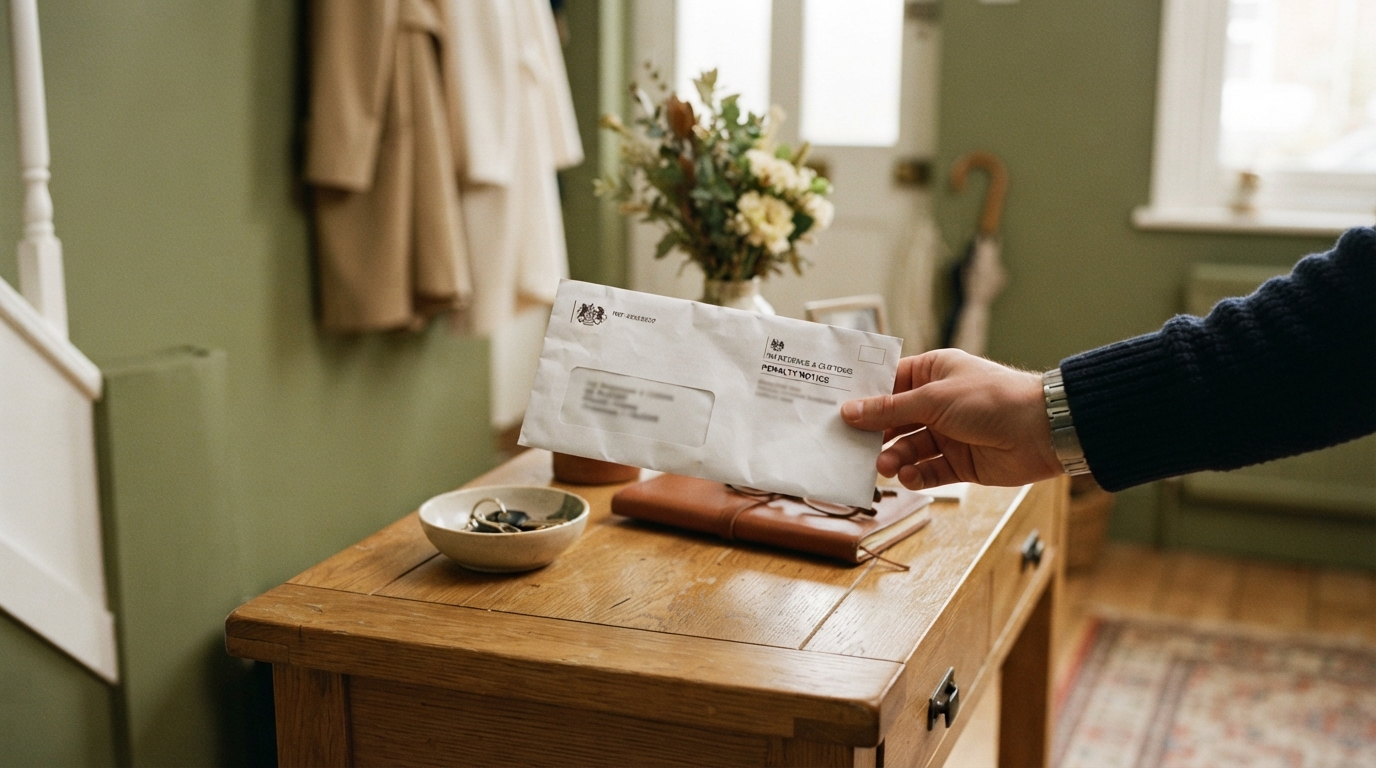
You have the letter. It says you owe £100 for a late Self Assessment return. The instinct is to pay it, file it away, and move on. Before you do that, it is worth understanding what the £100 actually is, because in most cases it is not the whole story.
The £100 is the first charge in a system designed to grow. Acting in the first few weeks costs you very little. Leaving it can turn a £100 letter into a four-figure bill. This guide explains what happens next, the one action that stops the escalation, and whether you can get the £100 itself cancelled.
The £100 is the start of the fine, not the whole of it
HMRC applies the £100 fixed penalty automatically the moment your return is one day late. It is not discretionary, no caseworker reviews it, and it lands even if you owe no tax or are due a refund. That much most people know.
What is less widely understood is that the £100 is only the first of four stages. If the return stays unfiled, the charges escalate on a fixed timetable that runs in the background whether or not HMRC sends a reminder. The full penalty escalator is set out here, but the short version is below.
Get My Quote
Ready to get started? Tell us what is outstanding and we will send a fixed written quote within 48 hours, with no obligation.
How the charges stack up over time
The table below shows the position on a return where £8,000 of tax is owed. The penalties apply on top of the tax itself, and interest runs separately on the unpaid tax from the original payment date.
Penalty position by how late the return is (£8,000 tax owed)
| How late | Charge added | Running penalty total |
|---|---|---|
| 1 day | £100 fixed penalty | £100 |
| 3 months | £10 per day, up to 90 days (£900 maximum) | up to £1,000 |
| 6 months | 5% of tax owed or £300, whichever is higher | £1,400 |
| 12 months | A further 5% or £300 | £1,800 |
On an £8,000 bill, twelve months of inaction turns the £100 into roughly £1,800 in penalties before interest is added. The 5% surcharges scale with the tax owed, so a larger bill produces larger surcharges. The daily charges, by contrast, are the same for everyone, and they are the part most people could have avoided.
The one action that stops the escalation
Filing the return. That is the whole answer. The moment the return is submitted, the daily charges stop accruing, the risk of HMRC issuing its own determination of what you owe disappears, and the window to appeal the penalties opens properly. None of the later-stage surcharges can trigger on a return that has been filed.
You do not need complete records to do this. HMRC accepts a return filed on reasonable estimated figures with a note that an amendment will follow. Filing on estimates stops the clock today, and the numbers can be corrected over the following weeks. If you would rather not handle it yourself, a specialist can file a late return within 48 hours, usually on estimates first.
Estimated figures are allowed, and they stop the clock
A return filed with reasonable estimates and a note that an amendment will follow is a valid return. It halts the daily penalty immediately. Wildly understated figures are a separate problem, so estimates need to be honest, but you do not have to wait for perfect records before filing.
Can you get the £100 cancelled?
In some cases, yes. HMRC will cancel a penalty where you had a reasonable excuse: a genuine reason, beyond your control, that prevented you from filing on time, provided you then filed without unreasonable delay once the situation resolved. Serious illness, a bereavement, a hospital admission, a fire or flood, or an HMRC system failure can all qualify. Being busy, finding the return confusing, or not realising the deadline existed generally do not. The detail of what counts as a reasonable excuse is covered here.
Two conditions are time-sensitive. You must appeal within 30 days of the date on the penalty notice, and the return has to be filed before HMRC will consider the appeal. The appeal is made on form SA370 or online, and how to complete the SA370 is explained step by step here. Where the grounds are sound, a specialist-built penalty appeal materially improves the odds.
You cannot appeal a penalty on an unfiled return
HMRC will not process a penalty appeal until the underlying return has been submitted. File first, even on estimated figures, then appeal within the 30-day window. Skipping this step is the single most common reason DIY appeals stall.
What if you cannot pay the tax behind the penalty?
Filing stops the filing penalties, but it does not clear the tax. Interest runs on any unpaid tax from the original 31 January payment date and compounds daily. If you cannot pay in full, you can spread the bill through a Time to Pay arrangement, which also stops enforcement action while it is in place. Debts under £30,000 can often be set up online; larger amounts are negotiated, and a specialist who handles payment plans can present the financial case that gets a workable schedule agreed.
Common questions about the £100 penalty
I have already paid the £100. Can I still appeal?
Yes. Paying does not waive your right to appeal. If the appeal succeeds after payment, HMRC refunds the £100. Many people pay first to stop interest and enforcement, then appeal once they have time to do it properly.
I owe no tax. Do I still have to pay the £100?
The £100 applies regardless of whether any tax is due, so it stands once a return is late. A nil or refund position can strengthen a reasonable excuse appeal, though, and the later 5% surcharges, which are based on tax owed, will be zero.
Will appealing trigger a wider HMRC investigation?
No. A penalty appeal is a routine administrative process and does not flag your file for review. The fear that challenging a penalty invites extra scrutiny is unfounded, and it stops a meaningful number of valid appeals from being made.
What to do right now, in order
- 1Check the date on the penalty notice and count 30 days forward. That is your appeal window.
- 2File the outstanding return immediately, on estimated figures if necessary. This stops the daily charges.
- 3Decide whether you have reasonable excuse grounds, and gather supporting evidence with specific dates.
- 4Submit the appeal within the 30-day window, with the evidence referenced in the grounds.
- 5If you cannot pay the tax, arrange a Time to Pay plan before enforcement begins.
The worst response to a £100 penalty letter is to leave it in a drawer. Every week it sits there, the position gets more expensive. Acting this week usually keeps it at £100.
File today and stop the daily fines before they start
We file late returns quickly, often on estimated figures within 48 hours, and tell you whether the penalty is worth appealing. Fixed written quote within 48 hours, no obligation.